PCGS & NGC graded coins
A closer look at quality.
Independent authentication. Carefully assessed condition. A deeper understanding of the coin in your hand. Discover PCGS and NGC certified coins with a family-run firm.


Certified coins explained
What is a certified coin?
A certified, or graded, coin has been checked by an independent expert, given a grade for its condition and sealed in a protective holder. PCGS and NGC are the two services most collectors and investors rely on.
Professional Coin Grading Service (PCGS) and Numismatic Guaranty Company (NGC) are independent coin authentication and grading services. They examine submitted coins and record their assessment.
Numerical grades generally use a 1–70 scale. The number describes condition, not expected investment performance. Strike designations, surface issues and the characteristics of the particular issue also matter. Some coins receive a descriptive assessment rather than a numerical grade.
The protective holder carries identifying details and a certification number. Before purchasing, inspect the actual coin and holder and check the certification record with the relevant service.
Seventy points. One shared language.
PCGS and NGC both grade on the Sheldon 1 to 70 scale. For mint-state coins, the range that matters most runs from MS60 to MS70.
No wear from circulation. Contact marks, hairlines or weaker lustre can still be easy to see.
Attractive lustre and a good strike, with fewer and lighter marks than the grades below.
Strong lustre and strike. Any marks are minor and not distracting at normal viewing distance.
Exceptional quality. Marks are very few and very slight, so small differences in surface and eye appeal separate one grade from the next.
No post-production imperfections visible under 5x magnification. The highest grade on the scale.
Where we typically source for clients: MS67+ to MS70
A broad guide only. Each service publishes its own grade definitions, so read them alongside the coin you are considering.

Condition you can compare.
One shared language
A grade lets you compare condition between coins in a consistent way, without relying on a seller’s own description.
An independent opinion
The coin is assessed by a third party that does not sell it. The result is recorded against a certification number.
Sealed and identifiable
The coin is encapsulated in a tamper-evident holder carrying the grade and number, which you can check with the grading service.
A clearer premium conversation
Grade is one of the factors behind a collector premium. It helps explain a price, but it never guarantees a resale value.
Meet PCGS and NGC.

Professional Coin Grading Service
PCGS is one of the two leading independent grading services for coins. A PCGS grade is recognised by collectors, dealers and auction houses around the world, which is why so many people use it as a common reference point.
- Grades on the 70-point Sheldon scale
- Seals each coin in a rigid, tamper-evident holder
- Records every coin under a certification number you can check on the PCGS website

Numismatic Guaranty Company
NGC is the other leading independent grading service, and one of the most widely used in the world. Its holders and labels are familiar to buyers everywhere, so an NGC grade is easy for the next buyer to understand.
- Grades on the same 70-point Sheldon scale
- Encapsulates each coin in a sealed holder with a security-featured label
- Records every coin under a certification number you can check online
Browne & Turnbull is a PCGS and NGC dealer. Both services grade coins independently of us, and we encourage you to read how each one grades on its own website.
Why collectors and investors rely on them.
They are independent
A grading service is separate from the dealer selling the coin. It has no stake in the sale, so its opinion on authenticity and condition carries weight with buyers.
Grades follow published standards
Both services grade against a recognised scale and publish their standards, so a coin’s grade means broadly the same thing from one coin to the next.
Every coin is traceable
Each coin is recorded under its own certification number, which anyone can check on the service’s own website.
They are widely recognised
Collectors, dealers and auction houses around the world know and use PCGS and NGC grades, so the holder is understood by most buyers.

For investors
A certified coin is easier to assess from a distance. The grade, the certification number and the sealed holder give you a clear, checkable description of what you are buying, and the next buyer can see the same thing. It does not guarantee a resale price, demand or liquidity, and premiums can fall as well as rise.
For collectors
Grading ranks coins by condition, so you can compare examples of the same issue and choose the quality you want. The sealed holder protects the coin from handling, fingerprints and knocks, and keeps its recorded grade and identity with it.
How the sealed holder works.
Once graded, the coin is sealed into a hard plastic holder, often called a slab. Five parts do the work.
The label
Shows the coin, its year and issue, the grading service and the grade. Check it against the coin itself.
Certification number and barcode
Unique to this coin. Look the number up on the grading service’s website to confirm the details.
Security features
Labels carry security features such as holograms, which make a copied or altered label harder to pass off.
The sealed case
A rigid plastic holder, permanently sealed. It cannot be opened without visible damage, so tampering or swapping the coin shows.
The coin
Held in an inner ring so it does not move or rub against the case.
A sealed holder makes tampering visible, but it is not a substitute for checking. Always look at the actual coin and holder, and confirm the certification number with the grading service.

Inside the process
How a coin is graded.
Authentication
The coin is first checked to confirm it is genuine and has not been altered or damaged after minting.
Grading
Trained graders examine strike, surface preservation, lustre and eye appeal, and the coin receives a grade on the 70-point scale.
Encapsulation
The coin is sealed in a tamper-evident holder with a label showing the coin, its grade and a unique certification number.
Verification
The certification number can be checked on the grading service’s own website, so you can confirm the details before you buy.
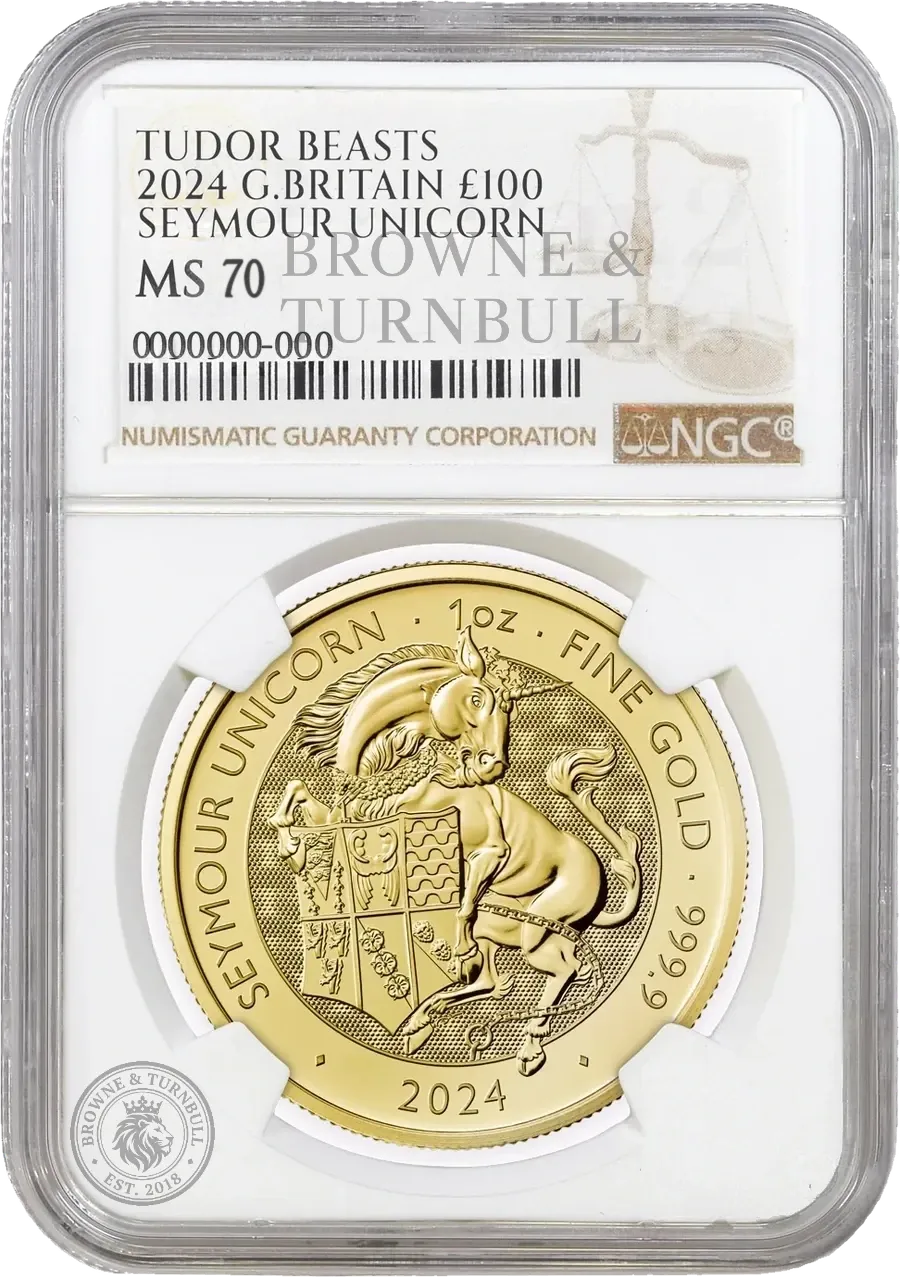
Tudor Beasts Seymour Unicorn
2024 · 1oz
Enquire for details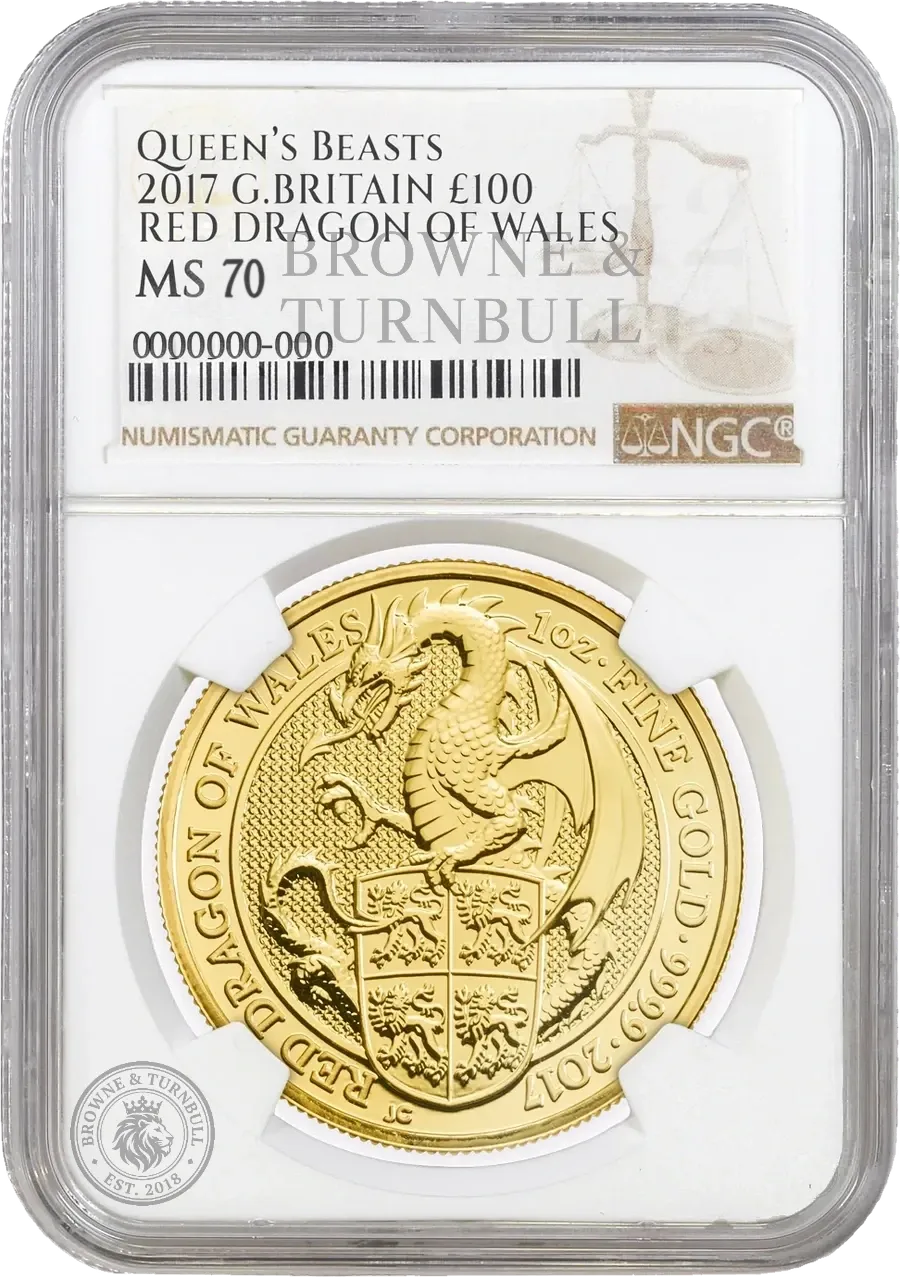
Queen’s Beasts Red Dragon of Wales
2017 · 1oz
Enquire for details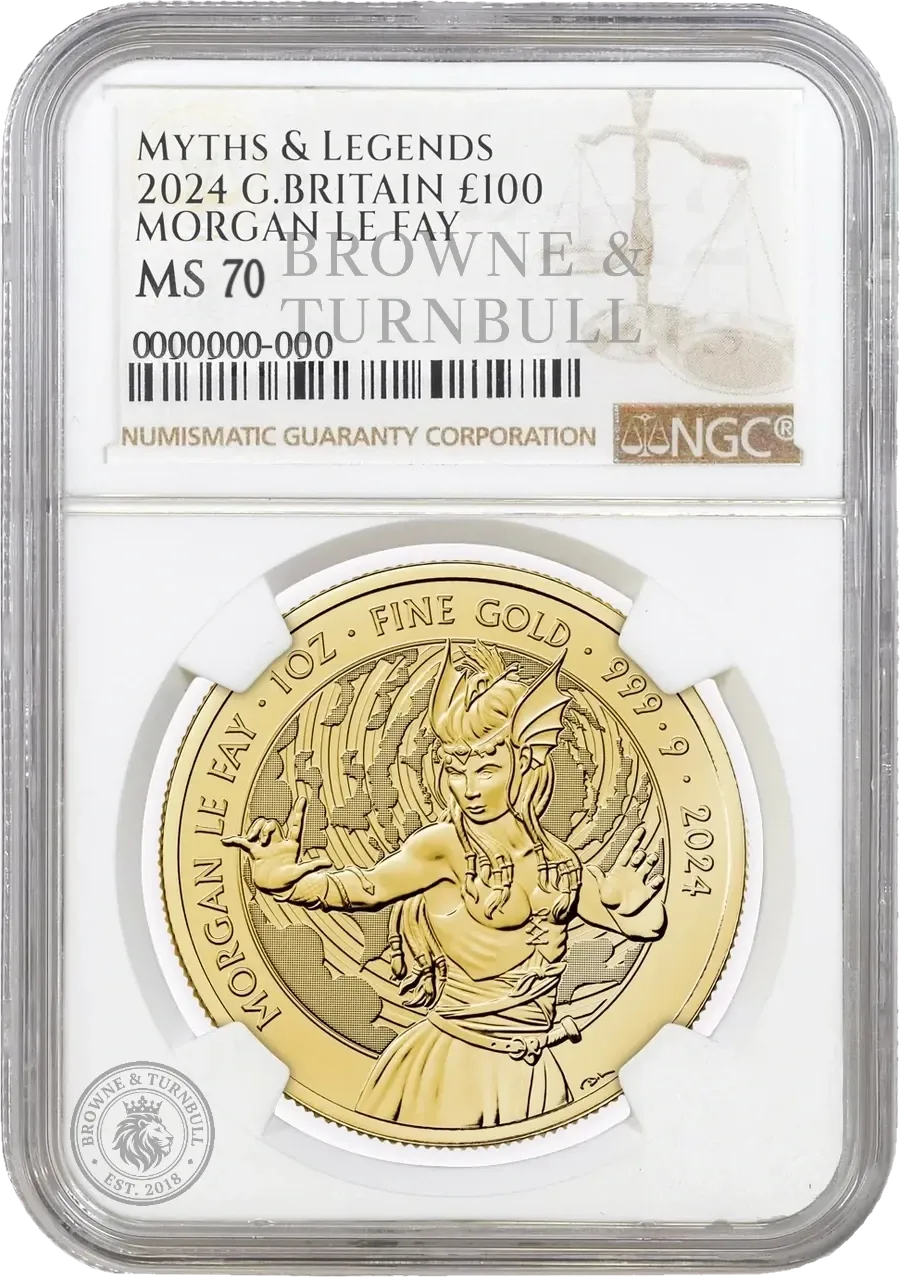
Myths and Legends Morgan le Fay
2024 · 1oz
Enquire for details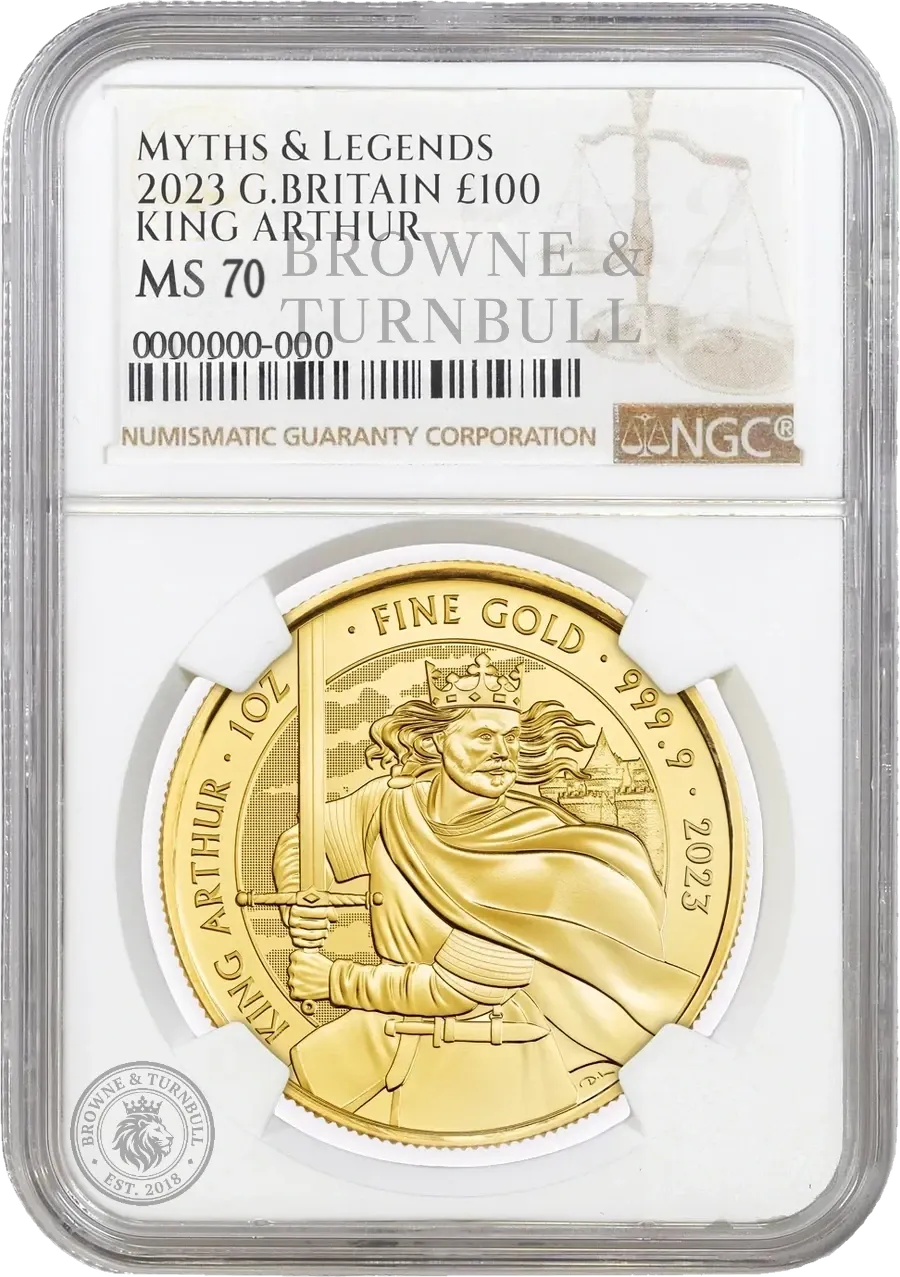
Myths and Legends King Arthur
2023 · 1oz
Enquire for details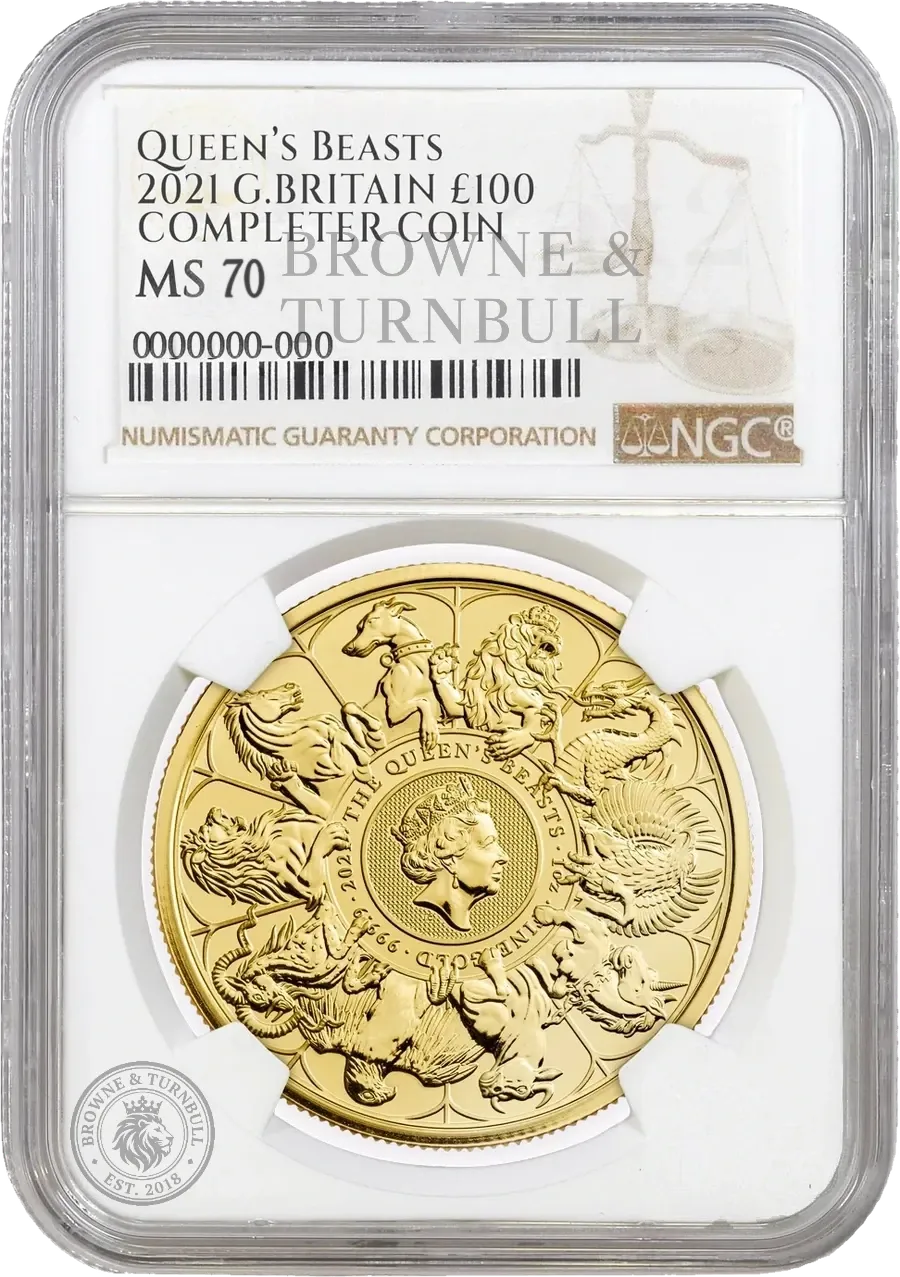
Queen’s Beasts Completer Coin
2021 · 1oz
Enquire for details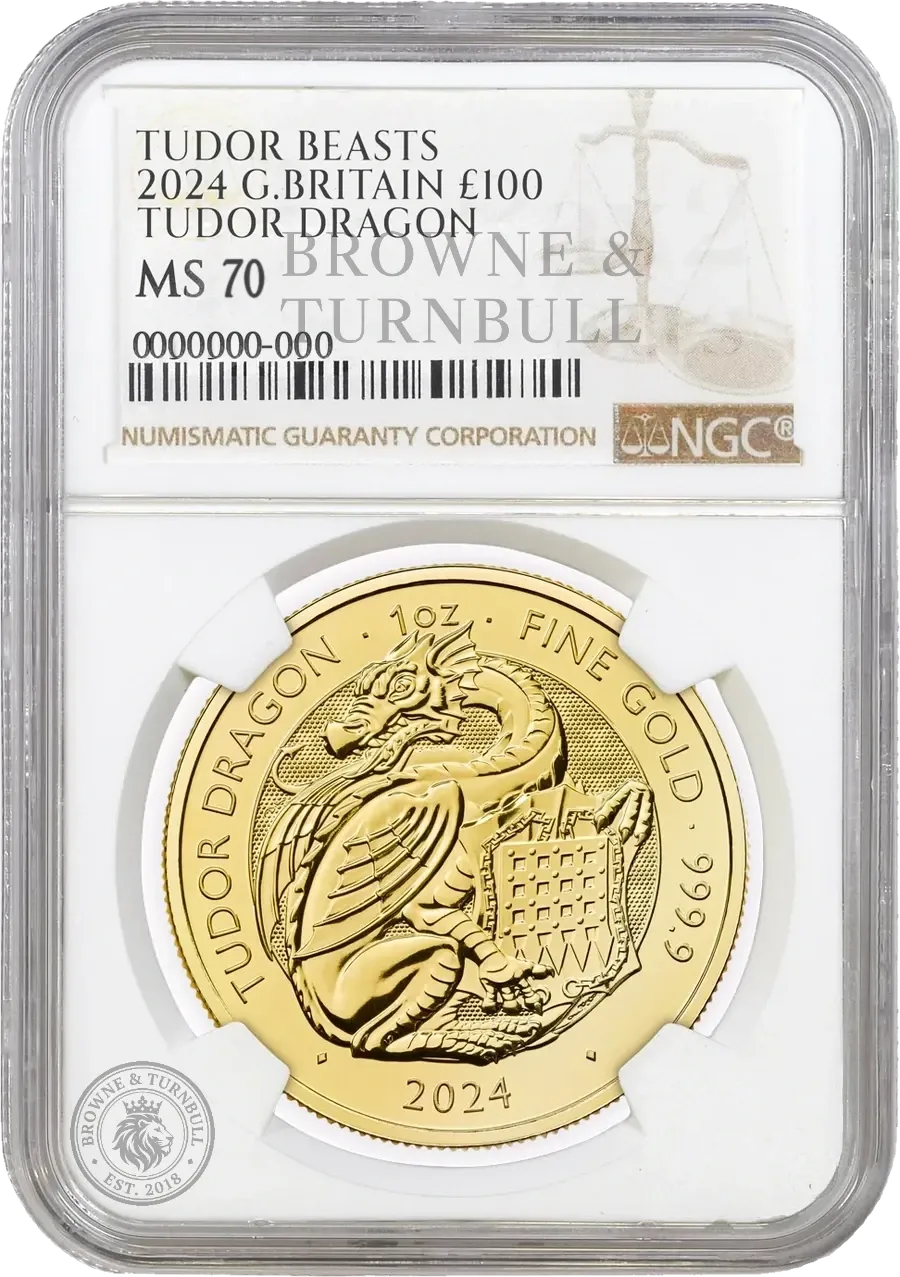
Tudor Beasts Tudor Dragon
2024 · 1oz
Enquire for details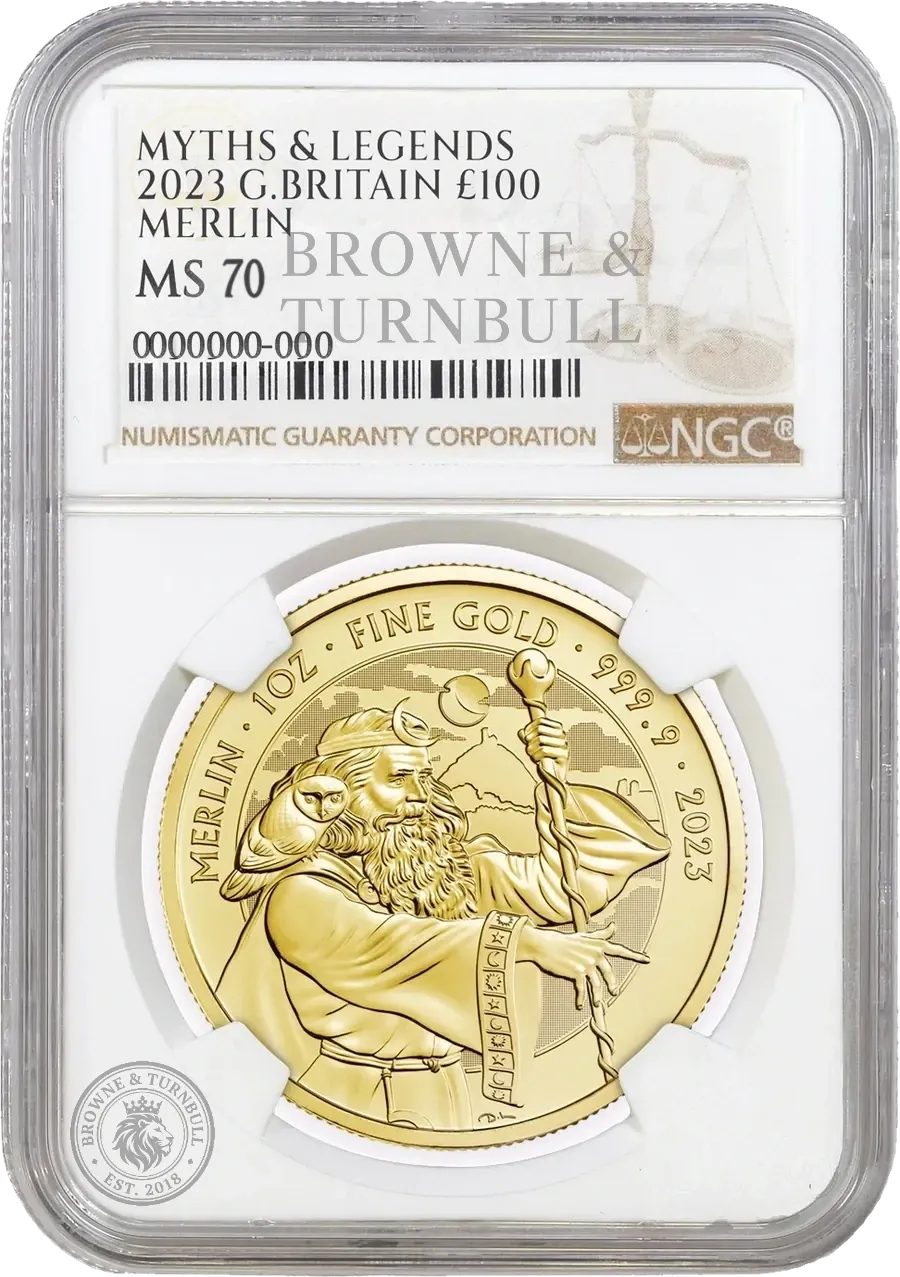
Myths and Legends Merlin
2023 · 1oz
Enquire for details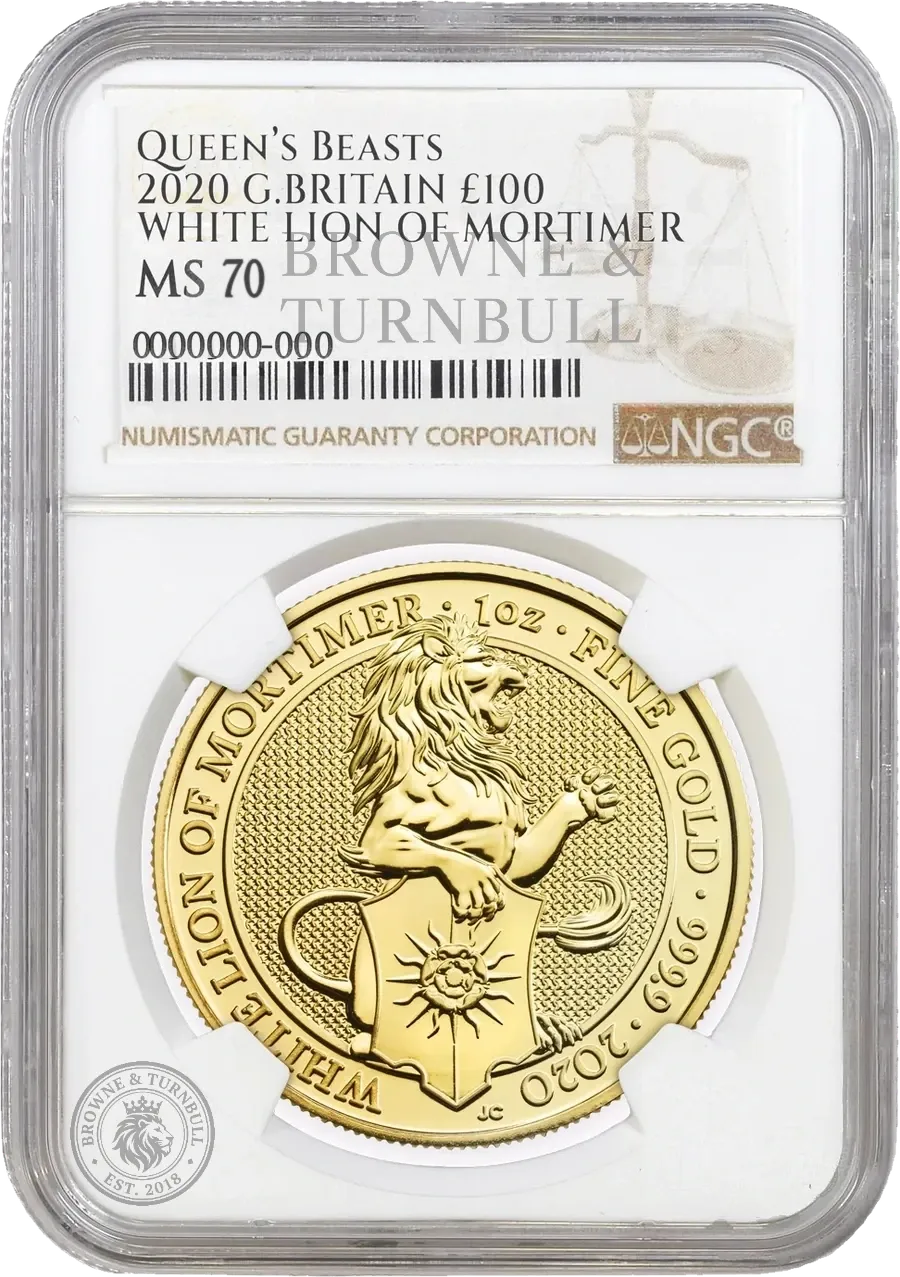
Queen’s Beasts White Lion of Mortimer
2020 · 1oz
Enquire for details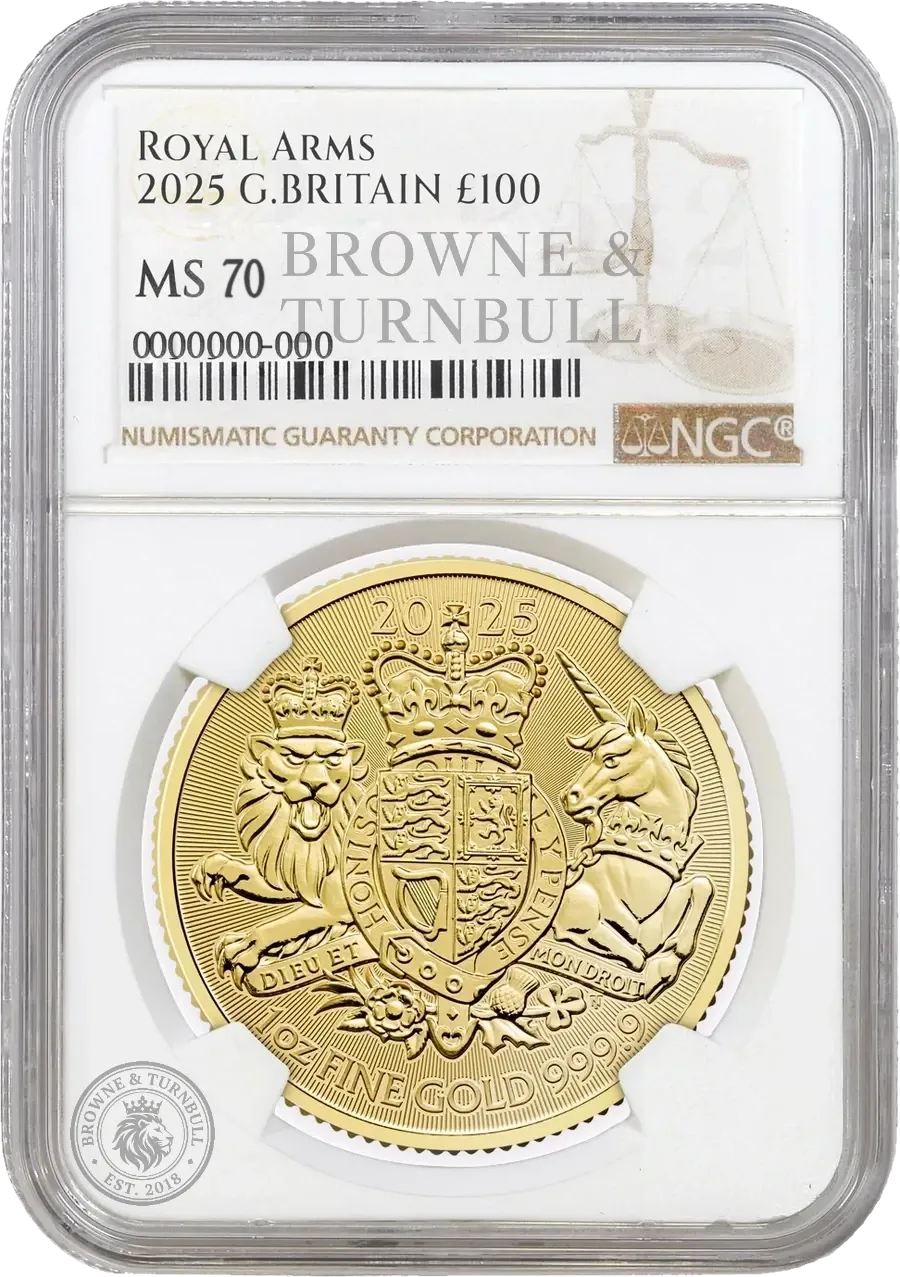
Royal Arms
2025 · 1oz
Enquire for details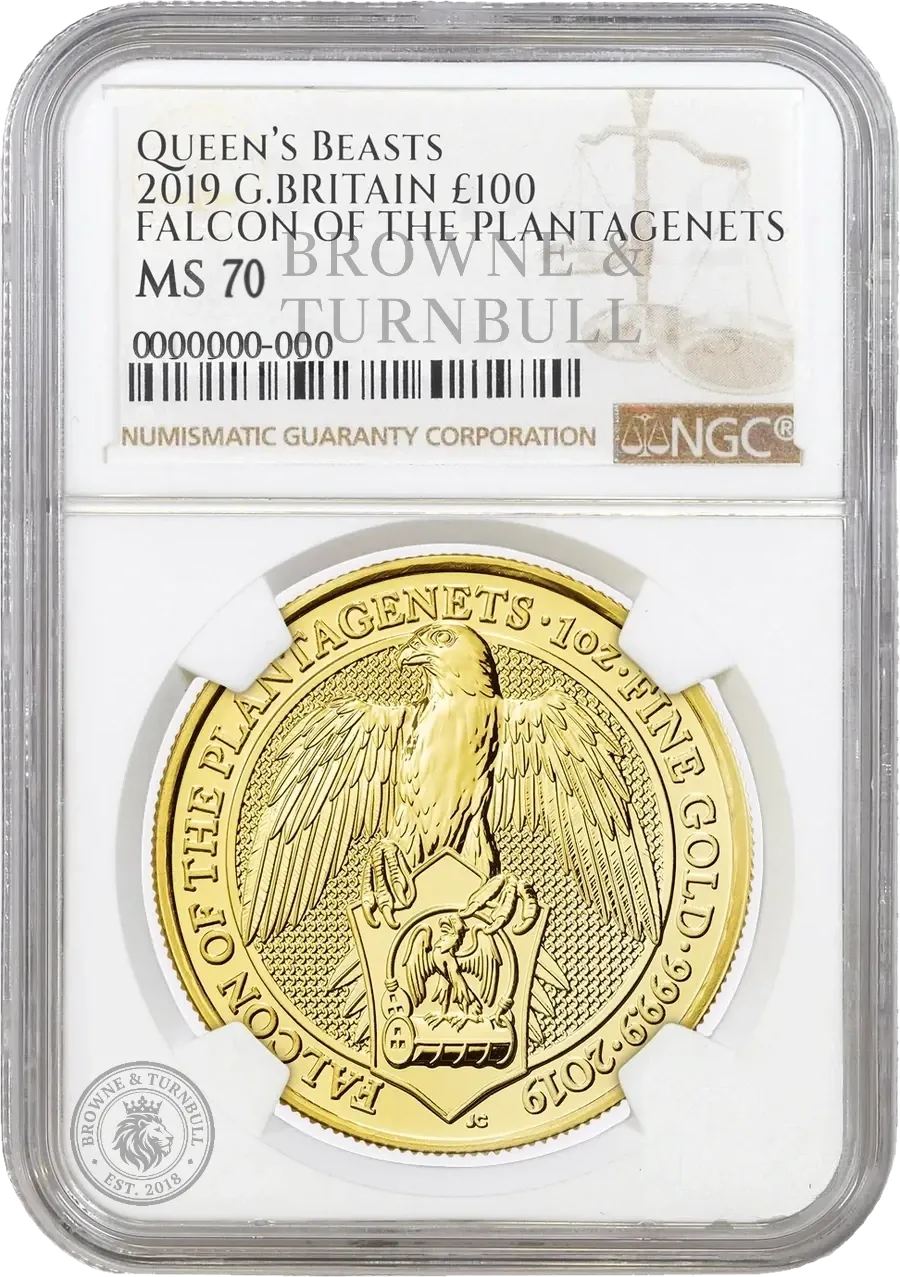
Queen’s Beasts Falcon of the Plantagenets
2019 · 1oz
Enquire for details


Exact products, availability and prices are confirmed personally when you enquire.
More than a number
Understanding the premium.
Condition
Small differences in preservation can influence collector interest. Compare the grade alongside the coin itself.
Rarity
Mintage, survival and availability may affect scarcity. A low mintage alone does not guarantee strong demand.
Collector appeal
A particular year, design or series may attract interest, but tastes and premiums can change.
Market context
Resale depends on buyers, costs and market conditions. Certification is not a guarantee of liquidity or future value.
Guidance on the individual coin.
We consider quality, availability, price and collector demand rather than selecting on grade alone. Ask our team about the issues that interest you. We will discuss current options and provide the actual product details, photographs, certification information and quote before you decide.
Gold and silver graded coins can trade at premiums that move independently of the underlying metal. A high numerical grade does not remove the possibility of loss. We do not publish unverified performance claims or assumed stock availability.
Clarity before commitment
A few questions, answered.
Thoughtful decisions start with a clear understanding.
What is the difference between bullion and graded coins?
Bullion is usually purchased primarily for its precious metal content, with a premium for manufacturing, distribution and other costs. Graded coins have been independently assessed for authenticity and condition. Their price may also reflect rarity and collector demand. Neither category guarantees a return.
What do PCGS and NGC do?
Professional Coin Grading Service (PCGS) and Numismatic Guaranty Company (NGC) independently authenticate and assess coins. Eligible coins are encapsulated with a label describing the coin and its grade or assessment. Certification records should be checked with the relevant grading service; certification is not a guarantee of investment performance.
What affects the price of a coin?
Metal content, the market price of the metal, condition, rarity, year, availability and collector demand can all play a part. Manufacturing, distribution and dealer costs also influence the premium. A high grade alone does not establish value or guarantee an easy resale.
How can I sell my holdings in the future?
Discuss likely resale routes, documentation and costs before purchasing. A future offer will depend on the product, condition, prevailing market and buyer demand. Purchase and resale prices differ; there is no guaranteed buyback, price or time to sell.

A personal introduction
Start with a conversation.
Whether you are making your first purchase or adding to an existing collection, speak with our team about the options available.